ngọn cờ
Trang chủ

nhà sản xuất buồng thử nghiệm môi trường

nhà sản xuất buồng thử nghiệm môi trường

  • ESS Stress Screening Chamber Selection Q&A | Lab Companion Explains Key Concerns ESS Stress Screening Chamber Selection Q&A | Lab Companion Explains Key Concerns
    Apr 25, 2026
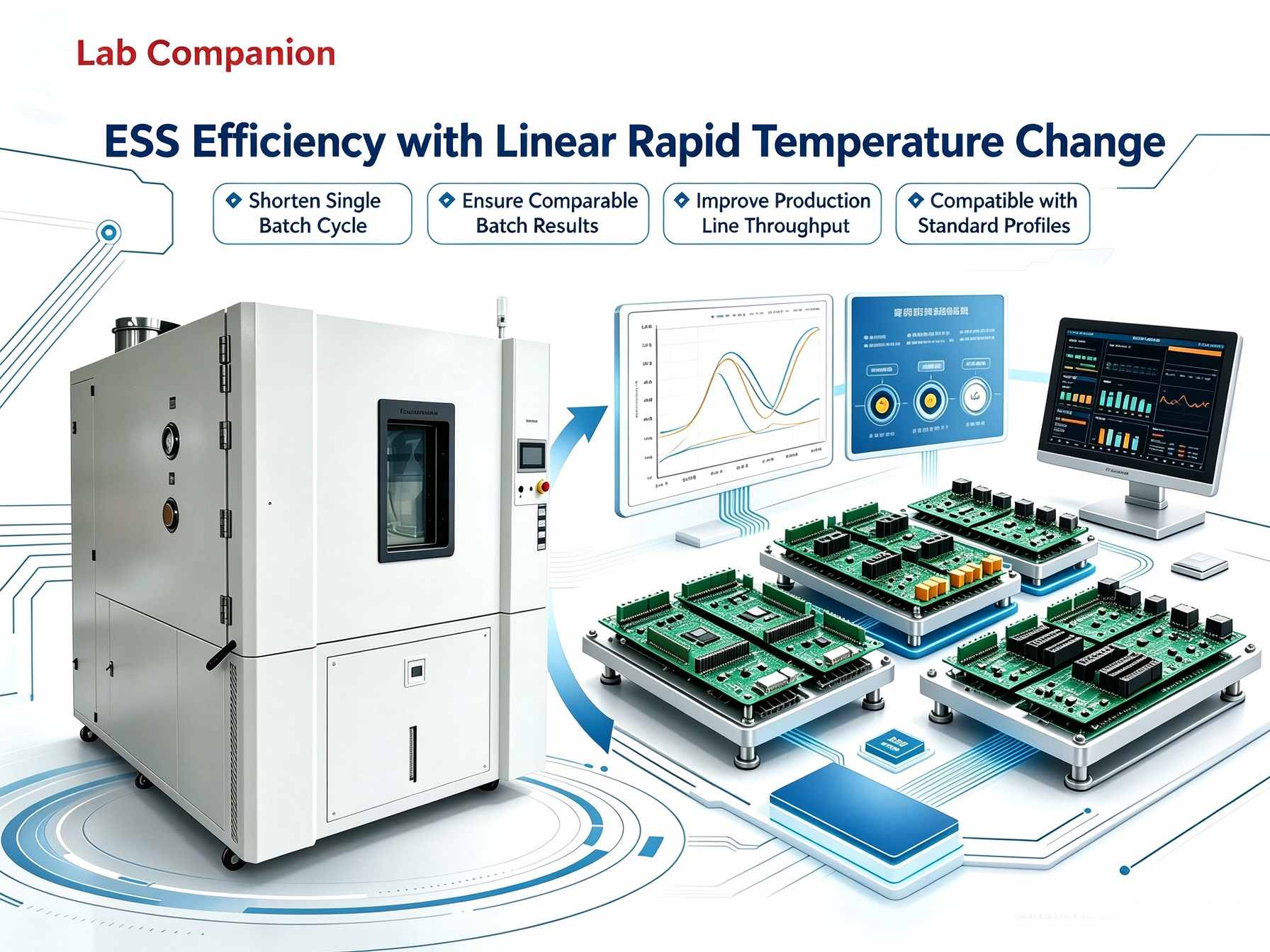
    The procurement of rapid temperature change chambers and ESS (Environmental Stress Screening) test chambers represents a high-investment, long-term capital purchase for industrial facilities. During the selection process, buyers commonly have concerns regarding performance consistency, operational stability, power consumption, usability, after-sales support, MES system integration, and hidden costs. With over 20 years of industry experience and thousands of global client projects, Lab Companion summarizes the ten most frequent customer inquiries for ESS chamber selection. The following professional, practical responses help factories make reliable, cost-effective purchasing decisions. Concern 1: Can the published temperature ramp rate be achieved in actual testing? Lab Companion Answer: Factory tested with load; official test curve reports provided to eliminate specification inflation Many competitive chambers only achieve nominal temperature change rates under no-load conditions. Once test samples are loaded, ramp speed drops significantly and fails to meet standard ESS screening requirements. All Lab Companion rapid temperature change and ESS stress screening chambers completefactory calibration with simulated loads. Each unit is delivered with official, verified temperature profile reports. Customers may also perform on-site acceptance tests using their actual products, with our professional engineers supporting full verification to ensure published specifications match real-world performance. Concern 2: Are units prone to failure after long-term 24/7 continuous operation? Lab Companion Answer: Industrial-grade components + 72-hour aging testing + full-unit warranty for maximum operational stability ESS screening requires round-the-clock operation, often exceeding 20 hours of daily runtime, which demands exceptional hardware durability and reliability. Lab Companion chambers feature premium imported compressors (Bitzer, Tecumseh), industrial PLC controllers, and full copper welded refrigeration systems with conservatively rated critical components. Every unit undergoes 72-hour continuous factory aging testing to eliminate potential defects. A 1-year full equipment warranty is provided to minimize production downtime and operational risks for high-intensity industrial environments. Concern 3: Can standard chambers accommodate oversized or irregularly shaped test samples? Lab Companion Answer: Fully customizable chamber dimensions and sample fixtures for non-standard test pieces Lab Companion offers mature custom engineering capabilities. Standard chamber volumes range from 80L to 2000L to cover most conventional testing scenarios. Custom enlarged cavities and irregular internal geometries are available for oversized or uniquely shaped products. Custom drawer-type, hanging, tray-style sample racks and dedicated fixture interfaces are configurable based on product characteristics. Our engineering team reviews customer 3D product drawings before project confirmation to guarantee perfect equipment compatibility with unique testing requirements. Concern 4: Are rapid temperature change chambers too energy-costly for long-term mass screening? Lab Companion Answer: Multi energy-saving technologies deliver approximately 30% power savings during continuous operation Continuous batch stress screening consumes substantial power. Lab Companion integrates multiple optimized energy-saving designs to effectively reduce operational costs: • Inverter compressor + electronic expansion valve: Automatically adjusts refrigeration capacity according to real-time sample load and test conditions to avoid constant full-power operation • Intelligent standby sleep mode: Reduces fan speed and heating output during idle cycles to cut standby power consumption • Hot gas bypass defrosting: Eliminates energy-intensive electric heating defrost systems to reduce auxiliary power usage Field verification data confirms that compared with conventional fixed-speed models, Lab Companion rapid temperature change chambers achieve ~30% lower power consumption in continuous mass production environments. The incremental equipment investment is typically recovered within one year via reduced electricity costs. Concern 5: Is the system complicated for factory operators, leading to human error? Lab Companion Answer: Intuitive graphical interface + on-site professional training for zero-threshold operation Equipped with the proprietary Lab Companion H-Touch control system and a 7-inch color touchscreen, all devices support bilingual English/Chinese graphical interfaces. Core functions including test startup, curve review, and data export are pinned on the homepage for straightforward access. Complimentary on-site training covers equipment operation, program editing, routine maintenance, and basic troubleshooting until factory personnel achieve independent operational proficiency. Built-in operator permission locks prevent unauthorized modification of critical parameters, effectively eliminating operational errors and inconsistent test data. Concern 6: Is after-sales support slow? Will discontinued models lose component support? Lab Companion Answer: 12 regional service centers, fast response, and minimum 10-year spare part availability Lab Companion operates 12 direct after-sales service centers covering major industrial regions, delivering standardized support: 2-hour technical response and 48-hour on-site troubleshooting (remote areas negotiated separately). Urgent faults are resolved via instant remote video guidance. Common consumable parts including sensors, heaters, and fans are stocked locally at all service branches. For discontinued legacy models, Lab Companion guarantees a minimum of 10 years of spare part supply, ensuring full-lifecycle equipment serviceability and protecting customers’ long-term capital investments. Concern 7: Can test chambers integrate with factory MES systems for data traceability? Lab Companion Answer: Standard industrial protocol support for seamless MES integration To meet smart factory requirements for full data traceability and quality closed-loop management, Lab Companion ESS chambers come standard with RS485 and Ethernet ports, supporting mainstream industrial protocols including Modbus RTU, Modbus TCP, and OPC UA. Lab Companion provides complete protocol documentation and professional technical support to assist internal IT teams or third-party system integrators during deployment. Real-time temperature profiles, cycle counts, alarm logs, and test results can be automatically uploaded to MES platforms to achieve fully traceable, auditable quality control. Concern 8: Does rapid temperature & humidity cycling cause condensation and unstable humidity control? Lab Companion Answer: Comprehensive anti-condensation structure and independent humidity control ensure precise environmental stability Conventional test chambers frequently suffer from internal condensation, delayed sensor response, and unstable humidity during fast temperature ramps, compromising test accuracy. Lab Companion solves these industry pain points with optimized mechanical design: • Dual-layer insulated observation window + embedded chamber heating films prevent wall condensation • Independent high-precision humidity control system with armored stainless steel sensors for fast, accurate response • Built-in drainage troughs automatically evacuate residual condensed water without disrupting test conditions Independent verification confirms that under rapid cycling rates of 5~10°C/min, chamber humidity stability remains within ±5%RH of setpoints, complying with high-precision combined environmental testing standards. Concern 9: Is periodic calibration complicated and costly? Lab Companion Answer: One-stop transparent calibration services with certified accreditation Lab Companion maintains long-term partnerships with multiple CNAS-accredited metrology laboratories, offering flexible calibration solutions: • Factory calibration service: Units are returned to Lab Companion facilities for full third-party certification and delivered back to customers • On-site calibration assistance: Our engineers cooperate with customer-appointed local metrology institutes for on-site certification • Factory calibration report included: All new units ship with standard factory calibration certificates to satisfy routine quality audits Proactive periodic calibration reminders and bundled preferential calibration packages are provided to simplify customer quality management procedures. Concern 10: Are there hidden costs or arbitrary price increases? Lab Companion Answer: Fully documented, contract-listed pricing with zero hidden fees Lab Companion implements standardized, transparent quotation policies. All charges including base unit cost, optional accessories, freight & insurance, installation, training, and taxes are itemized identically in quotations and formal contracts. No extra or hidden fees apply beyond contracted items. Complete standard and optional configuration lists are provided prior to contract signing for flexible customization. All non-human-induced failures, component replacements, and on-site repairs are free within the warranty period. Post-warranty services only charge component and travel fees with no mandatory service subscriptions. Conclusion ESS stress screening and rapid temperature change chambers are critical capital equipment for product reliability validation and consistent production quality control. With decades of specialization in environmental test equipment manufacturing, Lab Companion prioritizes customer confidence through premium build quality, transparent pricing, professional technical support, and comprehensive after-sales service. We resolve all procurement concerns and deliver stable, cost-effective, fully customized ESS testing solutions for global industrial manufacturers.
    ĐỌC THÊM
  • Comprehensive Analysis of Temperature Change Testing: How Lab Companion Test Chambers Adapt to Various Temperature Change Standards Comprehensive Analysis of Temperature Change Testing: How Lab Companion Test Chambers Adapt to Various Temperature Change Standards
    Apr 24, 2026
    Temperature change testing is a core fundamental item in environmental reliability testing, widely used for quality verification of various products. However, test standards followed by different industries and products have significant differences in requirements for core parameters such as temperature change rate, cycle times, and dwell time. Backed by more than a decade of technical accumulation, Lab Companion has developed a full range of test chambers covering conventional temperature change, rapid temperature change, environmental stress screening, and high-acceleration temperature change, helping users accurately match standards and efficiently complete model selection. Starting with the interpretation of common temperature change standards, this article systematically introduces Lab Companion's product matrix, selection methods, and service guarantees, providing compliant and efficient testing solutions for users in various industries. I. Temperature Change Testing: Aligning with Standards is the Premise of Effective Testing The core purpose of temperature change testing is to assess a product's ability to resist thermal stress and maintain normal working performance under alternating temperature environments. Whether it is consumer electronics, automotive electronics, military equipment, or medical devices, the corresponding industry test standards will clearly define the following key parameters as the core basis for testing: • Temperature change rate (℃/min): Determines the intensity of thermal stress applied • Temperature range (extremes of high and low temperature): Matches the boundary of the product's actual operating environment • Cycle times and dwell time: Simulates the frequency of temperature alternation during the long-term use of the product • Whether to superimpose humidity: Some scenarios require simulating complex environments with alternating temperature and humidity If the test equipment parameters do not match the standard requirements, it is likely to lead to two types of invalid test results: first, insufficient stress, which fails to stimulate potential product defects and loses the significance of testing; second, over-stress, which causes abnormal product damage and misleads R&D and production decisions. Therefore, accurately selecting a suitable temperature change test chamber in accordance with standards is the first step to ensure the authenticity and effectiveness of test data. Lab Companion has in-depth decomposed the mainstream temperature change standards in various industries and developed corresponding product series in a targeted manner, simplifying the user's model selection process and ensuring that each piece of equipment can accurately meet standard requirements, balancing test compliance and efficiency. II. In-depth Interpretation of Common Temperature Change Test Standards Electronics and electrical engineering, automotive, and military industries are the three most widely used fields for temperature change testing. The following are the most commonly used test standards in each field, all of which have exclusive equipment accurately adapted by Lab Companion, covering the full range of needs from basic testing to extreme screening. 1. GB/T 2423.22 / IEC 60068-2-14 Test Nb: Conventional Temperature Change Test This standard belongs to the basic temperature change test for civil electronic products, with mild and stable requirements, suitable for conventional products that do not require harsh thermal stress testing. • Temperature change rate: 1℃/min ~ 5℃/min (can be set as needed) • Temperature range: Combined with the actual operating environment of the product, the common range is -40℃~+85℃ • Cycle times: 5~20 times, adjusted according to product specifications • Core features: Gentle temperature change rate, low testing threshold, suitable for general civil consumer electronics and household appliances • Adaptable equipment: Lab Companion Standard Temperature Change Test Chamber (temperature change rate ≤5℃/min, linear temperature control, low energy consumption and easy maintenance) 2. GB/T 2423.22 / IEC 60068-2-14 Test Nc: Rapid Temperature Change Test Rapid temperature change is a testing method that applies more severe thermal stress to products, mainly used to screen potential early failures of products and improve product reliability, widely used in mid-to-high-end electronic equipment. • Temperature change rate: Usually required to be >10℃/min, with the common industry standard being 15℃/min • Temperature range: -55℃~+125℃, which can be expanded to a wider range according to needs • Cycle times: Up to more than 100 times, meeting the requirements of harsh screening • Core features: High intensity of thermal stress, high screening efficiency, suitable for automotive electronics, communication equipment, and industrial control products • Adaptable equipment: Lab Companion Rapid Temperature Change Test Chamber Series (rate 10~15℃/min, linear/non-linear optional, one machine adapts to various test needs) 3. Automotive Standard AEC-Q100 / ISO 16750-4: Exclusive Temperature Change Test for Automotive Electronics Automotive electronics need to withstand severe temperature changes in the vehicle environment for a long time. Aiming at the particularity of automotive electronics, this standard has clear requirements for the stability, continuity of temperature change cycles and sample monitoring. • Temperature change rate: Typical values are 5℃/min, 10℃/min or 15℃/min, matching the temperature change characteristics of the vehicle environment • Temperature range: -40℃~+125℃ (Grade 1, suitable for most automotive electronics) • Cycle times: 500~1000 times, simulating the temperature change impact during the entire life cycle of the automobile • Core requirement: Real-time monitoring of the functional status of the sample during the temperature change cycle is required to ensure that the test is consistent with the actual working conditions • Adaptable equipment: Lab Companion ESS Environmental Stress Screening Test Chamber (industrial-grade long-life components, supporting 24-hour uninterrupted operation, suitable for batch production screening) 4. Military Standard GJB 150.5A: Temperature Change/Temperature Shock Test for Military Equipment Military equipment has extremely high requirements for environmental adaptability. Although the principles of temperature shock and rapid temperature change are different, some equipment screening still requires the use of highly harsh rapid temperature change methods, emphasizing the uniformity and repeatability of temperature change. • Temperature change rate: ≥10℃/min, some high-end equipment requires more than 20℃/min • Temperature range: -55℃~+85℃, which can be expanded to a wider range according to the needs of military equipment • Core features: High uniformity and repeatability of temperature change, which can accurately simulate thermal stress impact in extreme environments • Adaptable equipment: Lab Companion High-Acceleration Temperature Change Chamber (maximum temperature change rate 30℃/min, supporting non-linear temperature change, suitable for HALT/HASS tests) III. Lab Companion Temperature Change Test Chamber Product Matrix In response to the hierarchical needs of the above-mentioned different standards, Lab Companion has built four core product series, covering the full scenario from conventional temperature change to high-acceleration temperature change, accurately matching the test needs of various industries, and balancing compliance, economy and practicality. Product Series Temperature Change Rate Range Linear/Non-linear Typical Compliant Standards Main Application Fields Standard Temperature Change Chamber 1~5℃/min Linear GB/T 2423.22 Nb Consumer Electronics, Household Appliances Rapid Temperature Change Test Chamber 5~15℃/min Linear/Non-linear Optional IEC 60068-2-14 Nc Automotive Electronics, Industrial Control ESS Stress Screening Chamber 10~20℃/min Mainly Linear AEC-Q100, ISO 16750 Batch Production Screening, Automotive Testing High-Acceleration Temperature Change Chamber 15~30℃/min Non-linear GJB 150, HALT/HASS Military, High-Reliability Products 1. Standard Temperature Change Chamber (Economical Type) Core features: Adopts single-stage compressor refrigeration, combined with precise heating tube control to achieve stable and uniform slow temperature change, meeting the requirements of basic temperature change standards. Core advantages: Low energy consumption, convenient maintenance, high cost performance, no complex operation required, suitable for basic performance testing in the R&D stage and routine quality verification of civil products. Selection suggestion: If the test standard corresponding to your product does not clearly require "rapid temperature change" and only needs to meet conventional temperature change parameters, this series is preferred, balancing economy and compliance. 2. Rapid Temperature Change Test Chamber (Main Model) Core features: Adopts two-stage compression or cascade refrigeration technology, combined with high-power heaters and high-precision PID temperature control algorithm to achieve stable temperature rise and fall of 10~15℃/min, with high temperature control accuracy and stable temperature change curve. Core advantages: Can flexibly switch between linear and non-linear temperature change modes, one machine meets the test needs of multiple standards, suitable for harsh testing in mid-to-high-end electronics, automotive electronics and other fields. Typical configuration: Internal volume 225L~1000L, temperature range -70℃~+180℃, temperature change rate 10℃/min (linear), which can be customized and expanded according to sample size and test needs. 3. ESS Stress Screening Chamber (Production Type) Core features: Designed specifically for batch screening on the production line, core components such as compressors and air duct motors adopt industrial-grade long-life configurations, which can meet the needs of 24-hour uninterrupted cycle testing. Core advantages: Complete data recording, stable and reliable, optional MES interface to realize the linkage between test data and production system, greatly improving the screening efficiency of batch products, suitable for large-scale production testing of automotive electronics and industrial components. Suitable scenarios: Batch screening beside the production line, which can complete the temperature change cycle testing of hundreds of products every day and quickly eliminate products with early failures. 4. High-Acceleration Temperature Change Chamber (Extreme Type) Core features: Adopts liquid nitrogen assistance or high-power compressor unit, which can achieve a maximum non-linear temperature change of 30℃/min, and can quickly apply extreme thermal stress, adapting to the needs of extreme reliability testing. Core advantages: Mainly used for HALT/HASS tests, which can quickly expose potential design margin defects of products, helping to optimize product structure and improve product extreme reliability in the R&D stage. Notes: During the test, it is necessary to monitor the sample temperature, accurately control the temperature change rhythm, and avoid product damage caused by over-testing. Lab Companion engineers can provide professional test plan guidance. IV. Selection Guide: Quickly Match Lab Companion Equipment According to Standards To help users quickly and accurately select models and avoid invalid testing caused by mismatched parameters, Lab Companion provides two convenient model selection assistance methods, with professional technical team support throughout the process to reduce the difficulty of model selection. 1. Online Selection Parameter Form Users only need to provide the following three core information, and Lab Companion's technical support team will quickly calculate the required cooling capacity and heating power, and recommend the most economical and suitable equipment model: • Test standard name (e.g.: GB/T 2423.22-2012 Test Nc) • Temperature change rate requirement (e.g.: 15℃/min linear) • Sample size and heat load (length, width, height and material, to facilitate calculation of suitable cabinet specifications) 2. Standard Compliance Verification Report Before leaving the factory, each Lab Companion test chamber will undergo simulated operation testing in accordance with the test standard specified by the customer, and a third-party calibration certificate will be provided simultaneously to ensure that the equipment parameters fully meet the standard requirements. Users can use this report as proof of equipment compliance for laboratory accreditation, customer audits and other scenarios, without the need for additional standard verification. Frequently Asked Questions About Model Selection Q: My standard clearly requires "5℃/min average temperature change", can I choose a model with linear 5℃/min? A: Yes. The linear temperature change model has higher temperature control accuracy and more stable test data, but the price is slightly higher than the non-linear model; if the standard only requires "average temperature change" and no high-precision linear control is needed, the non-linear model can be selected to effectively save costs. Lab Companion can provide both models as needed. Q: I need to perform both temperature change and humidity testing, how should I select the model? A: You can choose Lab Companion's "Rapid Temperature Change and Humidity Test Chamber" series, which adds high-precision humidity control function on the basis of rapid temperature change, adapting to the needs of alternating temperature and humidity testing. Note: When the temperature change rate exceeds 10℃/min, the humidity stability will be affected to a certain extent. Lab Companion engineers will evaluate the test feasibility and optimize parameter settings according to your specific standard requirements. V. Service Guarantee: Ensure Long-Term Compliance of Equipment with Standards Selecting test equipment that meets standards is only the first step. The maintenance of accuracy and parameter calibration during long-term operation of the equipment directly affects the effectiveness of test data. Relying on a complete service system, Lab Companion provides users with full-life cycle service support to ensure that the equipment remains stable and compliant with standards for a long time. • Installation, commissioning and operation training: Professional engineers will provide on-site installation and commissioning, and conduct operation training simultaneously, focusing on explaining the setting methods of temperature change parameters in the standards and equipment maintenance skills, ensuring that operators proficiently master the key points of equipment use. • Regular calibration service: High-precision inspection instruments are used to regularly detect the temperature change rate and temperature uniformity at each point in the chamber, and a professional calibration certificate is issued to ensure that the equipment parameters are long-term accurate and meet standard requirements. • Remote diagnosis and program upgrade: When industry standards are updated (such as changes in temperature change curves and parameter requirements), the controller program can be upgraded through remote software without replacing hardware, ensuring that the equipment is always adapted to the latest standards and reducing upgrade costs. VI. Conclusion Although temperature change testing seems basic, to accurately meet the requirements of different industry standards such as GB, IEC, AEC, and GJB, it not only requires the equipment to have stable temperature change capacity and high-precision temperature control level, but also requires the manufacturer to have a deep understanding of various standards and rich technical accumulation. Lab Companion has been deeply engaged in the field of environmental reliability testing equipment for more than ten years, focusing on core technologies of rapid temperature change, building a full product matrix from conventional to high-acceleration, coupled with professional model selection guidance, standard verification and full-life cycle services, helping users in various industries efficiently complete testing tasks and escort product reliability.
    ĐỌC THÊM
  • Whatever Size Your Product Is, We Can Build the Chamber to Match It — Lab Companion's Custom Walk-In Environmental Test Chamber Solutions Whatever Size Your Product Is, We Can Build the Chamber to Match It — Lab Companion's Custom Walk-In Environmental Test Chamber Solutions
    Apr 22, 2026
    In the field of environmental reliability testing, countless engineers have faced a tricky challenge: carefully developed product prototypes, complete machines, and even system-level equipment cannot fit into standard-sized rapid temperature change test chambers due to their excessive dimensions. From meter-long power battery packs and full-rack AI servers to aerospace cabin sections and other large components, the limited volume of standard chambers has become the biggest bottleneck hindering test progress. "Cannot test, no way to test, or outsourcing testing is expensive and untrustworthy" — this is the real dilemma of testing large test pieces. With more than 20 years of experience in custom non-standard solutions, Lab Companion offers a straightforward solution: no compromise on "standard sizes", only reliable "tailor-made" adaptations to ensure accurate testing for every large test piece. I. Why Do Large Test Pieces Require a "Walk-In" Chamber? As the name suggests, a walk-in rapid temperature change test chamber is a large environmental testing chamber that people can easily enter. It breaks the limitations of traditional test chambers' "open door - place sample - close door" mode, creating an exclusive testing space that can accommodate complete machines, full racks, and even small equipment, perfectly meeting the testing needs of large test pieces. Which products urgently need walk-in testing solutions? • New Energy Field: Power battery packs (often over 1.5m×1m×0.5m in size), energy storage container modules • AI Computing Infrastructure: Full-rack GPU servers, liquid-cooled cabinets (over 42U in height) • Automotive Electronics: Complete automotive cockpit domain controllers, on-board charger assemblies • Military and Aerospace: Missile cabin sections, satellite components, airborne radar radomes • Large Industrial Equipment: Wind power converters, rail transit traction converters These products share common characteristics: large size, heavy weight, and high heat generation. Ordinary rapid temperature change chambers cannot accommodate them at all; even if barely fit, they will seriously affect the uniformity of the temperature field and the authenticity of the temperature change rate, failing to meet the strict testing standards. II. Lab Companion's Walk-In Rapid Temperature Change Chamber: Spacious, Testable, and More Accurate To address the pain points of testing large test pieces, Lab Companion has launched the Walk-in Series of rapid temperature change test chambers, with a volume range of 1000L~10000L (1m³~10m³), which can be further expanded to larger non-standard sizes according to customer needs. This is not a simple scaling up of standard chambers, but a comprehensive redesign from structure, refrigeration, air duct to control system to ensure uncompromised testing performance. 1. "Custom-Made" Sizes, No Limitations in Adaptation Lab Companion's technical team will accurately design the internal net size of the chamber based on the core needs provided by the customer, such as the maximum size of the test piece, placement method (single/multiple pieces), and access method (forklift, trolley, hoisting). For extra-long test pieces over 4 meters, a through-type or double-door structure can be customized to realize assembly line testing where the test piece enters from one end and exits from the other. For extra-high test pieces, a top hoisting port or side large flip door can be designed to completely solve the core problem of "cannot be placed in or taken out". 2. Split Structure: Quiet Operation, Convenient Maintenance Without Interrupting Work Walk-in chambers are large in size. If the refrigeration unit is integrated on the top or side of the chamber, it will not only increase the chamber height but also generate severe operating noise and affect heat dissipation efficiency. Lab Companion adopts a split structure design, where the refrigeration unit is independently placed outdoors or in a dedicated machine room and connected to the chamber through thermal insulation pipelines. The advantages are obvious: • Quiet and Comfortable: Noise sources such as compressors and fans are far away from the operation area, greatly reducing laboratory noise and ensuring a comfortable operating environment. • Efficient Maintenance: When maintaining the refrigeration system, there is no need to empty the test pieces in the chamber, realizing simultaneous testing and maintenance without delaying production progress. • Stable Refrigeration: The unit is placed outdoors or in a well-ventilated area, with better heat dissipation conditions, effectively ensuring stable and long-lasting refrigeration efficiency. 3. Special Optimization of Air Duct System, ±1.5℃ Uniform Temperature Field Even in Large Spaces The core technical difficulty of large walk-in chambers lies in ensuring temperature uniformity in large spaces — excessive space is prone to air short-circuiting, resulting in the phenomenon of "hot corners and cold center" and affecting the accuracy of test data. Lab Companion adopts a multi-point three-dimensional air supply design, arranging multiple adjustable air outlets on both sides or the rear of the chamber, combined with high-power centrifugal fans and deflectors to form a forced convection cycle, ensuring uniform coverage of the temperature field. Test data shows that under full load conditions, the temperature uniformity of Lab Companion's walk-in rapid temperature change chamber is ≤±1.5℃ (better than the industry's common ±2℃ standard), and the temperature fluctuation is ≤±0.5℃, fully complying with the strict requirements of various industry standards such as GJB and IEC for testing large test pieces. 4. Uncompromised Rapid Temperature Change: 5~15℃/min, Accurate Even Under Load Most large environmental chambers on the market can only achieve constant temperature or slow temperature change, while Lab Companion's walk-in series comes standard with rapid temperature change function, with a temperature change rate of 5℃/min, 10℃/min, 15℃/min (measured under full load). This is due to Lab Companion's self-developed high-power two-stage compression refrigeration system and efficient heat exchanger design. Even if a large number of metal test pieces are stacked in the chamber (such as 1000kg aluminum ingots as simulated load), the equipment can still stably maintain the set temperature change rate, completely avoiding the industry pain point of "fast under no load, slow under full load" and ensuring the authenticity and effectiveness of test data. 5. Wide and Expandable Temperature Range, Adapting to Extreme Testing Needs Under standard configuration, the temperature range of Lab Companion's walk-in rapid temperature change chamber covers -70℃~+150℃, which can meet the testing needs of most industries. If customers have special scenario requirements (such as polar environment simulation, high-temperature aging testing), it can be customized and expanded to -100℃~+200℃; for scenarios requiring extremely fast cooling (such as HASS screening), a liquid nitrogen auxiliary refrigeration system can also be equipped to increase the cooling rate to more than 30℃/min, fully adapting to various extreme testing scenarios. III. More Than "Large", It Also Combines Intelligence and Safety Large test pieces are often expensive, and the safety of the testing process is one of the customers' core demands. Lab Companion's walk-in series is equipped with multiple safety protection systems to fully protect the safety of test pieces and personnel: • Independent Studio Over-Temperature Protector: Completely separated from the control circuit, it cuts off the heating power supply in milliseconds once over-temperature occurs, eliminating potential safety hazards. • Multiple Compressor Protections: Comprehensive monitoring of various abnormalities such as high pressure, low pressure, overload, phase loss, and oil pressure difference to ensure stable operation of the equipment. • Dual Over-Temperature Protection for Heating System: Prevents continuous heating caused by breakdown of solid-state relays, further improving equipment safety. • Safety Door Lock Design: Cannot be opened from the inside during testing (to prevent accidental door opening), and is equipped with an internal emergency unlocking device to balance safety and emergency response. • Smoke Alarm and Automatic Fire Extinguishing (Optional): For flammable test pieces such as lithium batteries, it can be directly connected to the fire protection system to achieve early risk detection and disposal. In terms of intelligence, Lab Companion's walk-in chamber is equipped with the Q8 series large-screen controller, supporting multi-segment program editing, real-time display of temperature and humidity curves, and storage of 100,000 test data points. Data can be exported to PDF/Excel format via USB or Ethernet, perfectly meeting the data traceability requirements of CNAS laboratories. It also supports 4G remote monitoring, allowing engineers to check the equipment operation status, receive alarm information, and even modify test parameters remotely anytime and anywhere, greatly improving testing efficiency. IV. Real Case: 20m³ Walk-In Rapid Temperature Change Chamber for an Aerospace Institute Take the 20m³ walk-in rapid temperature change chamber customized by Lab Companion for an aerospace research institute as an example. This equipment is used for the full-machine temperature cycle screening (ESS) of satellite cabin components, with clear core customer requirements: • Internal Dimensions: 3.5m (length) × 2.5m (width) × 2.3m (height) • Temperature Range: -55℃~+85℃ • Temperature Change Rate: Average 10℃/min throughout the process • Test Piece Parameters: Maximum weight 800kg, self-heating about 8kW After on-site survey and accurate calculation of heat load, the customized solution finally delivered by Lab Companion includes: split refrigeration unit (placed in an outdoor dedicated machine room), air distribution of multi-point side wall air supply + top air return, electric sliding door (convenient for forklift access), anti-static floor and multi-point grounding terminals in the chamber, as well as remote monitoring and data traceability system. After delivery, the equipment has been operating stably for 18 months with zero failure rate. Under full load, the measured temperature change rate reaches 10.2℃/min, and the temperature uniformity is ≤±1.2℃, exceeding customer expectations. The test director of the institute commented: "Previously, we could only disassemble the cabin into components for separate testing, which was time-consuming and labor-intensive and could not simulate the full-machine thermal effect; Lab Companion's walk-in solution allowed us to achieve ESS screening at the full cabin level for the first time, increasing testing efficiency by more than 3 times." V. From "Cannot Test" to "Test Freely", Lab Companion Breaks the Limitations of Large Test Piece Testing Lab Companion deeply understands that behind every large test piece lies a major responsibility related to product reliability, customer trust, and even public safety. Therefore, we refuse to limit customers' testing needs with "standard sizes". Instead, based on more than 20 years of experience in non-standard customization, we use flexible, accurate, and reliable customized solutions to adapt to the testing needs of every large product, making testing of large test pieces no longer limited and helping customers achieve product quality upgrading.
    ĐỌC THÊM
  • The Hard Power Behind Trust: Why Lab Companion's Rapid Temperature Change Test Chambers Are the "Standard Choice" for Testing Institutions The Hard Power Behind Trust: Why Lab Companion's Rapid Temperature Change Test Chambers Are the "Standard Choice" for Testing Institutions
    Apr 21, 2026
    1. Introduction: Why Equipment Selection Matters for Third-Party Testing Institutions In the third-party testing industry, "equipment selection" is never a simple brand choice, but a trust vote related to data authority, operational efficiency and industry reputation. For professional laboratories with CNAS and CMA certification that undertake hundreds of commissioned test reports every day, the credibility of test data depends not only on the professional quality of operators, but also on the accuracy, reliability and compliance of test equipment — especially rapid temperature change test chambers, the "high-frequency core equipment" in the field of environmental reliability testing. Their performance directly determines the gold content of test reports and even affects the market competitiveness of testing institutions. Faced with the mixed and uneven quality of rapid temperature change test chambers in the market, how can third-party testing institutions get out of the "selection dilemma" and select truly trustworthy equipment suppliers? Lab Companion has given the most intuitive and convincing answer with more than 20 years of technological precipitation and a large number of delivery cases for testing institutions. 2. What Testing Institutions Really Need from Rapid Temperature Change Test Chambers The equipment procurement logic of third-party testing institutions is essentially different from that of enterprise-owned laboratories. For enterprises, rapid temperature change test chambers are "special tools" serving their own products; for third-party testing institutions, however, they are "public testing infrastructure" with harsh operation requirements, which constitute the "hard threshold" for industry selection: • High-load Operation Stability: Testing institutions have intensive orders, and rapid temperature change test chambers operate almost continuously (annual operation time often exceeding 6,000 hours). This requires the equipment to have high Mean Time Between Failures (MTBF) and long-term stable operation capacity. • Multi-standard Compatibility: Customers’ submitted products cover various fields (consumer electronics, auto parts, military products, etc.), requiring the equipment to be compatible with multiple standards (GB/T 2423.22, IEC 60068-2-14, GJB 1032, MIL-STD-2164, etc.) and realize "one machine for multiple uses" with flexible program switching. • Measurement Compliance: CNAS laboratories have strict requirements for data traceability. The equipment’s temperature sensor layout, calibration interface design and data output format must be convenient for measurement and compliance verification to avoid affecting laboratory efficiency. • Intelligent Interconnection: The equipment needs to be seamlessly connected with LIMS (Laboratory Information Management System) to realize automatic data synchronization and archiving, reducing manual costs and improving testing efficiency. These harsh requirements have eliminated most underpowered suppliers, and Lab Companion has accurately solved these pain points with its strong strength. 3. Lab Companion's Rapid Temperature Change Test Chambers: Key Advantages for Testing Institutions Lab Companion has been deeply engaged in the field of environmental reliability test equipment for more than 20 years, operating in strict accordance with ISO9001, ISO14001, ISO45001 and ISO27001 systems. Its products have passed EU CE certification, serving customers in key fields such as aviation, aerospace and communications. Its rapid temperature change test chambers have obvious advantages in the following aspects: • Full Specification Coverage: Equipped with a full range of volume models (34L, 64L, 100L, 180L, 340L, 600L, 1000L, 1500L), meeting all testing needs from component level to whole machine level in one stop, reducing repeated purchase costs. • Excellent Technical Parameters: Supports multiple linear temperature change rates (5℃/min, 10℃/min, 15℃/min, 20℃/min), temperature range of -70℃ to +180℃, and temperature fluctuation controlled within ±0.5℃. All core parameters are verifiable by CNAS third-party calibration, ensuring data authority. • Strong Standard Compliance: Fully compatible with international and domestic general standards, and deeply adapted to military standards, flexibly supporting "gradual cycle" and "abrupt impact" test scenarios. • Intelligent Interconnection: Supports real-time data synchronization and remote monitoring, seamlessly connecting with LIMS to realize automatic data archiving and improve management efficiency. 4. Real Cases: Repeat Purchases Prove Lab Companion's Quality In the testing equipment industry, "re-purchase" is the most direct recognition of product quality. Lab Companion's rapid temperature change test chambers have won continuous trust from authoritative testing institutions: • Chaozhou Quality, Metrology Supervision and Testing Institute (Guangdong Province): A government-authorized third-party inspection institution with CNAS, CMA and other qualifications. It undertakes national, provincial and municipal supervision and arbitration tests, and has continuously selected Lab Companion's equipment for its stable performance and accurate data. • Hubei Optics Valley Laboratory: An independent legal entity led by Huazhong University of Science and Technology, with high-standard reliability testing needs. It also chose Lab Companion's equipment to provide stable support for scientific research and testing. The reason for gaining such trust is Lab Companion's strict product philosophy: each equipment undergoes full-load aging test before leaving the factory, and core components (such as compressors from Copeland and Danfoss) ensure a service life of more than 10 years, reducing downtime losses. 5. After-Sales Service: Lab Companion's Commitment to Global Customers Lab Companion is more than an equipment supplier, but a long-term trusted partner. It provides comprehensive service guarantees to meet the needs of testing institutions and overseas customers: • Global Service Network We maintain a comprehensive service network to deliver efficient after-sales support. Fast response and timely on-site maintenance are guaranteed to minimize equipment downtime globally. • Exclusive Value-Added Services Complimentary annual calibration, dedicated equipment files, as well as proactive maintenance and sensor calibration reminders are provided. We ensure reliable equipment performance and bring you worry-free operation all year round. • Professional Overseas Technical Support Our professional team offers round-the-clock online guidance for global users to resolve operational and after-sales issues rapidly, keeping your equipment running stably and efficiently at all times. 6. Conclusion: Trust Is Built on Hard Power Currently, the rapid temperature change test chamber market is chaotic, with many products failing to meet standards. However, Lab Companion adheres to military-grade quality, measured parameters and transparent contracts, proving that the equipment worthy of testing institutions' trust relies on hard power — the ability to stand CNAS calibration, withstand long-term operation and maintain data authority. Lab Companion's rapid temperature change test chambers have become the "standard choice" for third-party testing institutions, interpreting the connotation of trust with strength and accompanying their development as a reliable partner.
    ĐỌC THÊM
  • Lab Companion Walk-in Rapid Temperature Change Test Chamber — A New Testing Solution for Large-Scale Equipment in the AI Computing Era Lab Companion Walk-in Rapid Temperature Change Test Chamber — A New Testing Solution for Large-Scale Equipment in the AI Computing Era
    Apr 20, 2026
    In recent years, the iteration speed of core components of AI servers has been accelerating, and the heat load has risen sharply. Taking an AI server equipped with 8 high-end GPUs as an example, its peak power consumption easily exceeds 10kW, and the power density of high-density cabinets soars to more than 50kW or even 100kW, with heat output 3 to 5 times higher than that of traditional servers. More importantly, modern high-load clusters are not the occasional periodic peaks in traditional data centers, but continuous heat generation brought by high-intensity continuous operation. When the hardware operating temperature reaches the critical safety threshold of 85°C to 90°C, the GPU will automatically start the "thermal throttling" self-protection program to cool down by sharply reducing the core frequency, which directly leads to a significant attenuation of computing power, a drop in operating efficiency of up to 25%, and an unlimited passive extension of model training time, seriously restricting the efficiency of AI R&D and application landing. The drawbacks of traditional environmental reliability testing solutions have been fully exposed in this context. Limited by the cavity volume and heat load capacity, traditional testing equipment cannot accommodate the entire AI server/rack system at all, nor can it simulate the dense heat generated during the actual operation of GPU clusters, failing to meet the full-scenario reliability verification needs of AI equipment. Under this premise, a walk-in rapid temperature change test chamber with high load capacity and accurate environmental simulation capabilities has become an essential key equipment in the R&D and mass production verification links of AI servers, and even a core support for solving the contradiction between computing power and heat dissipation. Precisely Adapted to AI High-Heat Testing: Lab Companion Walk-in Rapid Temperature Change Environmental Chamber As a "leader in domestic scenario adaptation" with more than 20 years of experience in the field of environmental reliability testing equipment, Lab Companion, in conjunction with the advanced technical standards of France's Jielong, based on China's strong local R&D and manufacturing capabilities, has launched a high-heat, high-load Walk-in rapid temperature change environmental chamber specifically designed for large-scale high-power equipment testing, which accurately matches the testing needs of the AI computing era. Large Capacity + High Load, Easily Undertaking AI Whole-Rack Testing Traditional testing solutions are generally limited by equipment load capacity, making it difficult to restore the real heat generation environment of AI servers under full load, resulting in a disconnect between test results and actual application scenarios. Lab Companion's walk-in environmental chamber has achieved a major technological breakthrough — it can simultaneously carry 1000kg of aluminum ingots and a heat load of up to 50kW for testing, and the load capacity can be flexibly expanded according to the customer's actual testing needs. Whether it is an entire rack of AI servers, GPU cluster cabinets, or high-power communication equipment whole-system, the environmental chamber can easily accommodate them with its "super large capacity", eliminating the need to build additional testing platforms, greatly simplifying the testing process, and improving testing efficiency and accuracy. Indirect Refrigeration System, Achieving Dual Breakthroughs in Energy Saving and Precision In terms of energy consumption control and testing accuracy, the environmental chamber is equipped with an advanced indirect refrigeration system, which not only strictly controls the temperature and humidity uniformity within ±2K and the temperature and humidity fluctuation within ±1K during the test to ensure the accuracy and reliability of test data, but also reduces energy consumption by more than 50% compared with traditional refrigeration methods. Long-term use can save customers a lot of energy costs, truly achieving a win-win situation of environmental and economic benefits, and adapting to the needs of enterprises' green development. Wide Temperature Range and High Precision Control, Adapting to Diversified Industry Standards The equipment's temperature testing range covers -70℃ to +150℃, and the humidity range covers the standard 20~98%RH (the low-humidity type can be expanded to 5~98%RH), which can meet the diverse testing scenario needs of different AI equipment. The rapid temperature change series supports linear or non-linear temperature change rates from 5℃/min to 25℃/min, and can be equipped with a liquid nitrogen auxiliary refrigeration system to increase the cooling rate to 30℃/min, efficiently simulating extreme temperature change environments. The overall design strictly follows the GB/T 2423.2-2008 high-temperature testing standard, and also meets the latest industry standards such as T/UNP 538-2025, ensuring that the test results are authoritative and universal. Intelligent Control System, Easy Operation and Full-Process Traceability The equipment is equipped with the Q8 series intelligent controller, which supports multi-segment program editing, precise temperature and humidity calculation and full-process data recording. It is easy to operate and understand, without cumbersome operations by professional personnel. The entire testing process is traceable, facilitating customers to review test data and optimize test plans. In addition, the environmental chamber can seamlessly conduct joint debugging and testing with new heat dissipation solutions such as liquid cooling, and supports external CDU thermal management equipment, helping whole-machine manufacturers accurately verify the reliability of products under different heat dissipation solutions, quickly find thermal design shortcomings, and then optimize the system thermal management plan to enhance the core competitiveness of products. Laying a Solid Foundation for Computing Power Breakthroughs, Empowering the High-Quality Development of the AI Industry Heat is the natural enemy of computing power and a key bottleneck restricting the sustainable development of the AI industry. Lab Companion's high-heat walk-in environmental chamber is precisely the underlying supporting force in the AI computing era — it can not only help enterprises accurately verify the operational stability of AI equipment under extreme heat loads, but also enable the new generation of computing power products to have "temperature resistance for real application scenarios" before they are launched, reducing product failure risks from the source, shortening the R&D cycle, and accelerating product mass production and landing. Up to now, this series of products has been successfully applied in intelligent computing centers in many countries and regions in the Asia-Pacific. With stable operation performance, accurate testing capabilities and flexible scenario adaptability, it has won wide recognition and high evaluation from industry customers. In the future, with the continuous iteration of AI technology, computing power will be further upgraded, equipment power consumption and heat density will continue to increase, and testing requirements will become more stringent. Lab Companion will continue to deepen its presence in the field of environmental testing equipment, focus on AI computing power testing scenarios, continuously optimize product performance and iterate technical solutions, and contribute domestic strength to the breakthrough development of global AI computing power.
    ĐỌC THÊM
  • High-Reliability Rapid Temperature Change Test Chamber: Self-Stress-Screened Equipment by Lab Companion High-Reliability Rapid Temperature Change Test Chamber: Self-Stress-Screened Equipment by Lab Companion
    Apr 16, 2026
    In the military and aerospace sectors, product reliability is directly tied to national security and the success of space missions. From missile guidance systems and satellite communication modules to airborne radar and spacecraft electronic cabins, such equipment endures extreme temperature shocks and complex environmental stresses during service. To eliminate early product defects before launch and prevent field failures, Environmental Stress Screening (ESS) is an indispensable process. Accordingly, the rapid temperature change test chambers used for ESS must first undergo rigorous reliability qualification. With over 20 years of expertise in environmental and reliability test equipment, Lab Companion adheres to military-grade quality standards and full-process compliance systems, acting as a rigorous verifier of high-reliability rapid temperature change test chambers for national defense, military and aerospace applications. The company operates in accordance with ISO 9001, ISO 14001, ISO 45001 and ISO 27001 management systems, and all products hold CE certification. Its global clients cover core industries including aviation, aerospace, ordnance, shipbuilding, nuclear power, communication and electronics. 1. Inherent Reliability: Self-Stress Screening for Every Unit Military and aerospace clients trust our equipment based on a core principle: a screening chamber designed to expose product flaws cannot deliver credible test data if it suffers frequent malfunctions, temperature overshoot or unstable temperature change rates. Lab Companion integrates this self-verification philosophy throughout the entire product lifecycle. Every rapid temperature change test chamber undergoes full-load aging testing before delivery, simulating the harshest on-site operating conditions to ensure long-term stable performance from day one. The TC Series offers a test volume ranging from 270L to 1300℃, with a temperature range of -70℃ to +180℃, meeting screening requirements from component level to complete equipment level. It supports linear temperature change rates of 5℃/min, 10℃/min, 15℃/min and up to 20℃/min, with temperature fluctuation controlled within ±0.5℃, delivering accurate and stable data for military and aerospace testing. 2. Comprehensive Safety Protection System Military and aerospace tests involve high-value samples and extreme operating conditions, making equipment safety critical to test success. Lab Companion rapid temperature change test chambers are equipped with a full-dimensional safety protection system to secure all test operations. Hardware-based independent protection includes dedicated over-temperature protectors, mechanical pressure switches and thermal relays, which cut off hazardous circuits within milliseconds independent of software control. The compressor is protected against overpressure, overload, high exhaust temperature and frequent startup via delay control. The heating system adopts dual over-temperature protection and anti-dry-burn design to isolate heating circuits automatically even if the main controller fails. These redundant safety designs ensure stable and secure 24/7 continuous operation for military screening tasks.           3. Full Military Standard Compliance: GJB 150A & MIL-STD-810H Testing for military and aerospace projects must fully comply with military specifications, and precise standard alignment is the foundation of compliant testing. Our rapid temperature change chambers meet international and domestic standards including IEC 60068-2-14 and GB/T 2423.22, and are fully optimized for military criteria such as GJB 150A and MIL-STD-810H, supporting two core test modes: gradual temperature cycling and thermal shock testing. In line with environmental stress screening specifications, the temperature change rates fully satisfy GJB 1032-90, covering 5℃/min to 15℃/min to meet ESS protocols for components and large-scale systems. The equipment also complies with mainstream global screening standards including MIL-STD-2164 and GJB 1032-90 in terms of temperature variation speed and cycle parameters. 4. ESS-Dedicated Design for Environmental Stress Screening Environmental Stress Screening (ESS) is a critical process to identify early failures and latent defects for military and aerospace electronic products. The ESS Series environmental test chambers are professionally engineered for ESS applications, accelerating temperature transition and adopting high-velocity airflow to efficiently induce potential product weaknesses. This series supports multiple test types, including rapid temperature change, condensation testing, high-temperature & high-humidity cycling, and combined temperature-humidity tests to meet full ESS requirements for electronic devices. Equipped with the Q8 color touchscreen controller, it features precise temperature control, minimal overshoot and user-friendly operation. The advanced cascade refrigeration system with eco-friendly refrigerants guarantees long-term continuous operation. With a temperature range of -55℃ to +85℃, adjustable temperature change rates of 5℃/min to 15℃/min and temperature uniformity ≤2℃, it fully executes electronic product ESS procedures specified in GJB 1032-90. 5. CNAS Calibration & Compliant Data for Military Assessment Test data serves as core evidence for military equipment appraisal, type approval and mass production qualification, requiring high authority and traceability. Every Lab Companion chamber is calibrated in a CNAS-accredited laboratory before delivery, with official calibration certificates provided as standard. All test data is directly acceptable for military certification and review, eliminating additional third-party inspection costs. Built-in high-precision data acquisition modules automatically generate timestamped test reports that fully comply with ISO 17025 laboratory data traceability regulations. 6. Practical Industry Cases: Reliable Support for Aerospace Research Our military and aerospace capabilities have been fully verified in real-world projects. We once customized a 20m³ large-volume test chamber for a key aerospace research institute with full military certification, solving industry pain points such as limited customization options and delayed after-sales service, setting a benchmark for domestic substitution. Our long-term partners include China Aerospace Science and Industry Corporation, China National Institute of Metrology and other leading national defense research institutions, providing stable high-performance environmental test equipment for the national defense and aerospace industry. Conclusion To screen high-reliability products, the test equipment itself must pass rigorous screening. Supported by decades of technical accumulation and military-grade quality management, Lab Companion insists on strict quality verification for high-reliability rapid temperature change test chambers. Covering ESS stress screening chambers, rapid temperature cycling chambers and high-low temperature test equipment, we uphold the brand commitment of Authoritative Guarantee for Compliant Testing, delivering traceable, accurate and reliable environmental reliability verification solutions for national defense and military equipment development.
    ĐỌC THÊM
  • Lab Companion High Temperature Oven Safety Procedures Lab Companion High Temperature Oven Safety Procedures
    Apr 15, 2026
    Safety Operation Procedures and Accident Prevention Measures for Lab Companion High Temperature Ovens High temperature ovens are widely used in industrial drying, curing, high-temperature aging and other working conditions. With high operating temperature and heavy running load, they are prone to cause burns, fires, explosions, electrical short circuits and other safety accidents. To ensure personnel and equipment safety and standardize operation procedures, these safety operation procedures and accident prevention measures are formulated in accordance with industrial oven application standards. 1. Safety Operation Procedures for High Temperature Ovens 1.1 Pre-Start Safety Inspection 1.1.1 Environment Inspection Keep the operation area ventilated, dry and tidy. No flammable and explosive materials, corrosive liquids, cartons, debris or other items are allowed within 1.5 meters around the oven. The ground shall be flat and stable, and sufficient space shall be reserved for equipment heat dissipation. 1.1.2 Equipment Status Inspection Check that the door sealing gasket is intact without damage, and the inner chamber, air duct and heating elements are free of oil, debris and water. Confirm that the temperature sensor, over-temperature protector, fan and emergency stop switch function properly. For explosion-proof ovens, inspect that the gas monitoring, exhaust and pressure relief devices are intact. 1.1.3 Sample Compliance Inspection It is strictly prohibited to place flammable, explosive, volatile, strong oxidizing or highly corrosive items. Sealed containers and pressurized components shall not be baked directly. Dangerous goods such as lithium batteries and chemical raw materials must be processed in dedicated explosion-proof ovens. Samples shall be placed evenly without blocking air ducts or touching heating elements, and the loading capacity shall not exceed 1/3 of the effective inner chamber volume. 1.1.4 Power, Water and Parameter Inspection Confirm that the supply voltage is consistent with the equipment nameplate and the grounding is firm and reliable. For water-cooled models, check that the cooling water flow and quality are normal. Verify the set temperature, time and program. Operation beyond the rated temperature range of the equipment is strictly prohibited. 1.2 Standard Operation During Operation • After placing samples, close and lock the chamber door tightly to ensure good sealing. • Start the equipment according to procedures, and observe whether the temperature rise, fan operation and instrument display are normal, with no abnormal noise, odor or smoke. • Assign dedicated personnel on duty during equipment operation. Check temperature and alarm information regularly; do not leave the post without permission or sleep on duty. • Frequent door opening, modification of system protection parameters, and touching of high-temperature inner chamber, sample racks and heating components are strictly prohibited during operation. • For live or liquid-containing samples, strictly control the load power and standardize wiring to prevent short circuits and liquid leakage. • In case of over-temperature, alarm or fault prompt, immediately press the emergency stop switch, cut off the main power supply, and restart only after troubleshooting. 1.3 Shutdown and Final Operations • After testing, stop heating first and keep the fan running to allow the internal temperature to naturally drop below 60°C before opening the door. • Open the door slowly sideways to release residual heat first. Wear high-temperature resistant insulated gloves when handling samples to prevent scalding. • Clean up residual debris and water in the inner chamber in a timely manner, wipe the inner chamber with soft cotton cloth, and keep the cabinet dry and clean. • Turn off the main power and water supply. Drain water from pipelines for water-cooled models. Tidy up tools and samples, and restore the operation area to order. • Fill in the equipment operation log truthfully, recording running time, temperature parameters, sample information and abnormal conditions. 1.4 Basic Requirements for Operators • Operators must be professionally trained and qualified before taking post, and be familiar with equipment structure, operation procedures and emergency response methods. • Wear insulated gloves, goggles and other protective equipment as required during operation. Do not wear loose clothing; tie long hair up to avoid entanglement with equipment. • Unauthorized personnel are prohibited from approaching or touching the equipment. Warning signs shall be set in the operation area. 2. Prevention Measures for Typical Accidents 2.1 Fire Accident Prevention • Baking of gasoline, alcohol, thinners, diluents and other flammable and explosive volatile substances is strictly prohibited. If necessary, use explosion-proof ovens with forced exhaust enabled. • Regularly clean dust, oil and plastic residues in heating tubes, air ducts and fans to prevent heat accumulation and spontaneous combustion. • Calibrate the independent over-temperature protection device quarterly to ensure automatic power cutoff of heating supply when temperature exceeds the limit. • Equip dry powder fire extinguishers near the equipment. Water or foam fire extinguishers are prohibited for electrical and high-temperature fires. • Avoid prolonged high-temperature operation without load to prevent overheating and burnout of heating elements. 2.2 High-Temperature Scald Prevention • Post obvious "High Temperature Hazard" warning signs on the equipment. Touching the cabinet, door or inner chamber during operation is prohibited. • Open the door sideways at high temperature: slightly open first for heat dissipation, then fully open. • Use special high-temperature resistant gloves and clamps for sample handling; bare-handed operation is forbidden. • Set up a warning area for equipment just shut down to prevent accidental contact and scalding by unauthorized personnel. 2.3 Explosion and Splash Accident Prevention • Sealed glass bottles, canned liquids and pressurized components are strictly prohibited from direct baking. Open placement and reserved pressure relief space are required. • For flammable and explosive samples such as batteries, cells and chemical powders, explosion-proof high-temperature ovens must be used, equipped with hydrogen/carbon monoxide monitoring, independent pressure relief and emergency exhaust functions. • Vacuum ovens shall strictly follow the procedure: "vacuum first, then heat up; cool down first, then break vacuum" to prevent burst caused by excessive internal and external pressure difference. • Place liquid samples in trays to avoid tilting and leakage, preventing high-temperature splashing injuries. 2.4 Electrical Safety Accident Prevention • The equipment must be reliably grounded. Regularly inspect the insulation of power cords and terminals to prevent electric leakage and short circuits caused by aging or damage. • Supply power according to rated power strictly. Unauthorized wiring and overloaded operation are prohibited to avoid tripping or fire. • Keep the operating environment dry. Do not operate with wet hands or rinse the electric control cabinet with water. • Keep the emergency stop switch unobstructed. Cut off power immediately in case of electrical abnormality; live maintenance is prohibited. 2.5 Equipment Failure and Damage Prevention • Establish a hierarchical maintenance system: clean air ducts and filters monthly, calibrate temperature, humidity and safety devices quarterly, and conduct comprehensive inspection of heating, fan and control systems annually. • Operation over temperature, overload or over weight is strictly prohibited. Forcible modification or disassembly of core components is not allowed. • Replace worn parts such as sealing gaskets, sensors and heaters with original accessories in a timely manner. • For long-term shutdown, run without load monthly to maintain component activity and prevent moisture damage. 2.6 Emergency Response Measures • Over-temperature / Alarm: Immediately press emergency stop, cut off power, close the chamber door, and troubleshoot after cooling. • Fire Danger: Cut off power immediately, extinguish with dry powder fire extinguisher. Do not open the door to supply oxygen. Alarm promptly if the fire spreads. • Scald Accident: Rinse the burned area with running clean water immediately. Seek medical treatment in case of severe injury. • Explosion / Leakage: Evacuate personnel quickly, cut off power and air supply, enhance ventilation, and allow professionals to handle the scene. • Electric Leakage / Shock: Turn off the main switch immediately. Do not touch the injured person or equipment with bare hands. Administer first aid and contact a professional electrician. 3. Daily Management Requirements • Organize regular safety training and emergency drills to improve operators’ risk prevention and emergency response capabilities. • Implement dedicated personnel management, regular calibration and maintenance records for equipment to ensure safety devices remain effective at all times. • Develop special safety plans separately for non-standard working conditions and dangerous goods baking; illegal operations are strictly prohibited. • Contact the official after-sales service of Lab Companion promptly for complex equipment failures. Unauthorized disassembly by non-professionals is prohibited.
    ĐỌC THÊM
  • Top 10 Cost-Effective Domestic Environmental Test Chamber Manufacturers Recommendation — How Does Lab Companion Define "Cost-Effectiveness"? Top 10 Cost-Effective Domestic Environmental Test Chamber Manufacturers Recommendation — How Does Lab Companion Define "Cost-Effectiveness"?
    Apr 14, 2026
    In the procurement decision-making of environmental test equipment, price is always the core sensitive point for purchasers. However, the true value of an environmental test chamber lies not only in the "one-time quotation" during procurement, but also in the total life cycle measurement. Hidden costs such as equipment energy consumption, failure downtime losses, maintenance costs, and service life are the key factors determining whether a high and low temperature test chamber is truly "worth buying". As a benchmark enterprise in domestic environmental test chambers, Lab Companion has redefined the "cost-effectiveness" of environmental test equipment with more than 20 years of in-depth experience — it is not a compromise on low prices, but the implementation of the core value of "optimal total cost throughout the life cycle". I. Lab Companion: More Than 20 Years of In-Depth Cultivation, Laying a Solid Foundation for "Cost-Effectiveness" from the Source An enterprise's ability to achieve "good quality at a reasonable price" is never a short-term game of cutting material costs, but stems from the systematic optimization of the entire chain from R&D, manufacturing to quality control. Founded in 2005, Lab Companion is headquartered in Dongguan City, Guangdong Province, with a standardized production base of over 6,000 square meters. It has three R&D and manufacturing centers in Dongguan, Kunshan and Chongqing, and 16 service centers nationwide, with an annual output exceeding 2,000 environmental test equipment. As a national high-tech enterprise and a specialized, refined, characteristic and innovative enterprise, the company has invested hundreds of millions of yuan in tackling core technologies, overcoming industry pain points such as temperature control accuracy, temperature switching efficiency and energy conservation, and has won 43 patents and 3 software copyrights, building an insurmountable technical barrier. 1. Independent R&D of Core Control System, Breaking Technical Dependence to Reduce Costs and Increase Efficiency Lab Companion's independently developed C100 type PID temperature and humidity control + fuzzy logic control system has the ability to automatically combine the working conditions of refrigeration, heating, vacuum and other subsystems. Its original cold-end regulation control method has obtained national patent certification, which fundamentally solves the industry problem of high energy consumption of traditional control systems. By independently developing the core controller, Lab Companion not only completely gets rid of the procurement dependence on external equipment, but also continuously reduces production and operation and maintenance costs in the process of technological iteration, providing core support for "high quality at low price". 2. Standardized and Large-Scale Manufacturing, Spreading Unit Costs While Ensuring Quality Lab Companion adopts a process-based assembly line operation mode, with complete process documents and process specifications for each process. It has introduced high-precision processing equipment such as Hong Kong LFK CNC bending machine and Germany TRUMPF laser cutting machine, which not only ensures the processing accuracy of products, but also greatly improves production efficiency. Large-scale production effectively spreads the fixed cost of unit products, while high-standard assembly technology reversely reduces the frequency of after-sales maintenance — this positive cycle of "manufacturing efficiency → cost optimization → quality stability" is the underlying logic for Lab Companion to achieve "domestic brand price and international brand quality". 3. Strict Factory Inspection, Reducing Hidden After-Sales Costs from the Source Lab Companion implements a full-process strict inspection for each factory equipment, comprehensively debugs the performance of each system, and completes the trouble-free continuous operation test before leaving the factory to ensure that the equipment can be put into use with zero failure when it arrives at the user's site. This pre-quality control verification greatly reduces the failure rate and after-sales costs after the equipment arrives at the site, and also enables Lab Companion to dare to promise "whole machine warranty ≥ 2 years and core components warranty 5 years", avoiding worries about later maintenance for purchasers. II. Four Core Dimensions, Decoding the Core Advantages of Lab Companion's "Cost-Effectiveness" The core of Lab Companion's "cost-effectiveness" is "the lowest total cost throughout the life cycle", which can be intuitively reflected from four dimensions: procurement, operation, maintenance and use. Each advantage accurately hits the core pain points of purchasers. 1. Procurement Cost: The Price of the Same Configuration is Only 50%-70% of Imported Brands, Refusing Quality Compromise The most direct embodiment of high cost-effectiveness is the procurement price advantage: the price of Lab Companion's environmental test chambers with the same configuration is 30%-50% lower than that of international brands, and the mid-range models only cost 50,000 to 150,000 yuan, which greatly reduces the procurement budget pressure. However, this advantage is not at the cost of sacrificing quality; on the contrary, it does not compromise on the configuration of core components: electrical accessories are selected from international first-line brands such as Siemens, Schneider and ABB; the refrigeration system is equipped with Germany Bitzer, Germany GEA Blogg and US Copeland compressors; refrigeration accessories are all from well-known international manufacturers such as Denmark Danfoss and US SPORLAN. "Using good materials and controlling costs well" allows purchasers to enjoy core configurations of international quality at domestic prices. 2. Operation Cost: Energy Consumption is 28%-38% Lower Than the Industry Average, Saving Considerable Electricity Costs in the Long Term Environmental test chambers mostly operate continuously for 24 hours, and electricity costs are long-term and huge hidden expenses. Lab Companion has invested special R&D in energy conservation and consumption reduction, and achieved energy-saving breakthroughs through a number of technological innovations: the unique design of cold and hot bypass regulation and liquid hammer prevention system keeps the compressor in the best working condition, taking into account service life and refrigeration efficiency; the refrigeration system adopts the inverse Carnot cycle design, which greatly improves the refrigeration efficiency; the cold-end regulation function of the C100 control system further reduces invalid energy consumption. For production lines or R&D laboratories that operate for a long time, tens of thousands of yuan in electricity costs can be saved every year, significantly reducing the total cost of ownership throughout the life cycle. 3. Maintenance Cost: Three-Year Failure Rate is Less Than 3%, Greatly Reducing Downtime Losses Equipment failure brings not only maintenance costs, but also hidden losses such as test interruption, R&D delay and production schedule disruption. The three-year failure rate of Lab Companion's equipment is less than 3%, which is far better than the industry average. The reliability comes from three guarantees: first, international first-line core components lay a foundation for long-term stable operation; second, the independently developed Q8 series control system has complete self-inspection, fault early warning and alarm functions, realizing "early discovery and early investigation"; third, the efficient service network built by 16 national service centers achieves "2-hour response in the Pearl River Delta and 48-hour on-site service nationwide", which is far beyond the response cycle of more than 72 hours of imported brands, minimizing downtime and reducing losses. 4. Usage Cost: Flexible Customization, Avoiding Space Waste and Secondary Investment The mismatch between the volume, temperature range and other parameters of the environmental test chamber and the actual test needs will cause space waste, increased energy consumption, or forced secondary procurement due to insufficient parameters. Lab Companion provides full-scenario customization solutions: the high and low temperature humidity test chamber covers a variety of standard volumes such as 34L, 64L, 100L to 1000L, and also supports non-standard customization such as 36L-1000L volume, -80℃ to 250℃ special temperature range and anti-corrosion inner tank, allowing purchasers to accurately match their own needs without spending "wasted money". In addition, the delivery cycle of conventional models is only 7-30 days, 60% faster than that of international brands, and non-standard customization can also complete the whole process from design, production to delivery quickly, improving procurement efficiency. III. Typical Product Series: Adapting to Different Budgets, Each is a Cost-Effective Choice Aiming at different scenarios and budgets, Lab Companion has created a diversified product series, which takes into account practicality and cost-effectiveness, and meets various procurement needs: 1. First Choice for Small and Medium-Sized R&D Laboratories: High and Low Temperature Humidity Test Chamber Covering a temperature range of -40℃/-70℃ to +150℃ and a humidity range of 20%-98%RH, it is equipped with a C100 type PID controller, which is easy to operate and stable in operation. The price of mid-range models is 50,000 to 150,000 yuan, which is suitable for the R&D and testing needs of university laboratories and small and medium-sized electronic enterprises, and is an entry-level cost-effective choice. 2. Adapted for Mass Quality Inspection on Production Lines: Constant Temperature and Humidity Test Chamber The temperature range covers -20℃ to +150℃, which is specially designed for rapid sampling inspection of electronic components and consumer electronic products in the production link. It has stable operation and low energy consumption, adapts to 24-hour continuous operation scenarios, and takes into account quality inspection efficiency and long-term use costs. 3. Large-Scale Projects and Extreme Environment Simulation: Walk-In Constant Temperature and Humidity Test Chamber/Large-Scale High and Low Temperature Chamber Aiming at scenarios such as vehicle testing and large-scale equipment verification, Lab Companion provides walk-in environmental test chambers and large-scale high and low temperature humidity test chambers. Adopting a modular assembly design, it is easy to install, and users can adjust the size and structure of the test chamber according to subsequent test needs, effectively reducing future expansion costs and adapting to the high-end needs of large enterprises and scientific research institutes. IV. Ultimate Verification of Cost-Effectiveness: Real Recognition from the Market and Customers The "cost-effectiveness" of a product is ultimately determined by the market and customers. Lab Companion's service network covers 16 cities nationwide, and its cooperative customers include industry leading enterprises such as Huawei, Gree, BYD, State Grid and China Southern Power Grid, as well as top scientific research institutes such as Tsinghua University, National University of Defense Technology, Chinese Academy of Sciences and National Institute of Metrology, with a customer repurchase rate as high as 85%. From the first batch of equipment delivered in 2005 that is still running stably to becoming a long-term partner of industries with high requirements for equipment reliability such as new energy, semiconductors and military industry, Lab Companion has proved its core competitiveness of "cost-effectiveness" through years of market precipitation — it is not a short-term price advantage, but a long-term value return. V. Procurement Guide: How to Accurately Evaluate the "Cost-Effectiveness" of Environmental Test Chambers? For purchasers, to judge the "cost-effectiveness" of an environmental test chamber, it is necessary to jump out of the misunderstanding of "simple price comparison" and comprehensively evaluate it from the following four dimensions to achieve "worth buying and saving in use": 1. Dimension 1: Matching Degree Between Procurement Price and Configuration Low prices are often accompanied by quality compromises. The premise of fair price comparison is "the same configuration" — compare prices on the basis of consistent key parameters such as temperature control accuracy, volume and core component brands. The price of Lab Companion's products with the same configuration is 30%-50% lower than that of international brands, which is based on this comparable standard, achieving "no compromise on quality and more favorable price". 2. Dimension 2: Accurate Calculation of Annual Energy Consumption Costs Low-cost equipment ignoring energy consumption will generate high hidden costs in long-term use. Taking a conventional constant temperature and humidity test chamber as an example, the annual operating electricity cost difference of equipment from different brands can reach tens of thousands of yuan. Lab Companion's energy consumption is 28%-38% lower than the industry average, which can save tens of thousands of yuan in electricity costs in long-term use and greatly reduce the total cost of ownership throughout the life cycle. 3. Dimension 3: After-Sales Response and Maintenance Cycle The downtime loss caused by equipment failure is often far more than the maintenance cost. When purchasing, it is necessary to focus on the after-sales system: Lab Companion's service commitment of 16 national service centers, 48-hour on-site response and whole machine warranty ≥ 2 years can minimize downtime and reduce hidden losses. 4. Dimension 4: Flexibility of Non-Standard Customization and Future Expansion Environmental test chambers are long-term use equipment, and the iteration of enterprise products will bring new test needs. Lab Companion's full coverage of 36L-1000L volume and -80℃ to 250℃ wide temperature range customization capacity can reserve space for the long-term development of enterprises, avoiding secondary procurement caused by changes in needs. Conclusion The true "cost-effectiveness" is never "low price and cheap", but "the lowest total cost and the highest comprehensive benefit throughout the life cycle". With more than 20 years of in-depth technological cultivation as the foundation, independent R&D to break technical barriers, large-scale manufacturing to reduce costs, strict quality control to ensure reliability, and efficient services to avoid hidden losses, Lab Companion has written a clear annotation for "cost-effectiveness" in the 2026 environmental test equipment market — allowing purchasers to spend less money to obtain more stable, energy-saving and cost-effective environmental test equipment, realizing the dual optimization of "procurement cost and long-term value".
    ĐỌC THÊM
  • Lab Companion Professional Insights: A Complete Analysis of the Five Core Indicators for Selecting High & Low Temperature Rapid Thermal Cycling Chambers Lab Companion Professional Insights: A Complete Analysis of the Five Core Indicators for Selecting High & Low Temperature Rapid Thermal Cycling Chambers
    Apr 13, 2026
    In the field of environmental reliability testing, a high-performance high & low temperature rapid thermal cycling chamber serves as core equipment for enterprises to control product quality and verify product reliability. As a leading brand deeply engaged in the environmental testing equipment industry for many years, Lab Companion boasts in-depth insights into testing demands across various industries and extensive experience in product R&D and practical application. We have accurately identified the core characteristics of a reliable and efficient high & low temperature rapid thermal cycling chamber. From Lab Companion’s professional perspective, this article systematically breaks down the five core performance indicators that must be focused on during the selection process, providing professional guidance for industry customers to help them make accurate selections, avoid procurement pitfalls, and make informed decisions that align with their actual needs. 1. Temperature Range & Rate of Temperature Change – Define Testing Boundaries and Determine Testing Efficiency Temperature range and rate of temperature change are the basic performance benchmarks of high & low temperature rapid thermal cycling chambers. They directly determine the breadth of the equipment’s application scenarios and affect the efficiency and pace of testing processes, making them the primary consideration in equipment selection. Temperature Range: The key is to ensure the equipment’s temperature range fully covers the extreme high and low temperature environments that products may encounter throughout their service life, avoiding limited testing scenarios due to insufficient range. Lab Companion high & low temperature rapid thermal cycling chambers offer a temperature interval of -70℃ to +150℃ and even wider ranges, with fully linear controllability throughout the process—not just transient peak values. This ensures stable and precise temperature regulation during testing, adapting to the testing needs of electronics, automotive, military, semiconductor and other industries. Rate of Temperature Change: During selection, priority should be given to distinguishing between no-load rate and loaded rate—the latter is more consistent with actual testing scenarios (simulating the heat capacity of real samples) and thus more valuable for reference. A high temperature change rate (e.g., 15℃/min and above) can significantly shorten testing cycles and improve testing efficiency, provided that temperature uniformity and stability are not compromised; otherwise, test data will be distorted. Equipped with a high-efficiency cascade refrigeration system and independently developed precise temperature control algorithms, Lab Companion achieves stable and nominal rapid linear temperature changes even under loaded conditions, truly realizing "efficient testing without compromise" and effectively enhancing testing efficiency while reducing time costs for customers. 2. Temperature Uniformity & Fluctuation – Lay the Foundation for Reliable Test Data Temperature uniformity and fluctuation are core indicators for evaluating the consistency and stability of the internal testing environment. They directly affect the repeatability and authority of test results, and are critical prerequisites for ensuring valid test data. Temperature Uniformity: Refers to the consistency of temperatures at various testing points within the equipment’s working space (industry standard: ≤±2.0℃). Poor uniformity will result in samples of the same batch being exposed to different thermal stress environments, rendering test conclusions meaningless and even misleading product R&D and quality judgments. Temperature Fluctuation: Refers to the variation amplitude of the control point temperature over time (industry standard: ≤±0.5℃). Excessive fluctuation introduces additional thermal stress interference to samples, compromising the accuracy and rigor of testing. Lab Companion Practice: Leveraging Computational Fluid Dynamics (CFD) technology, Lab Companion optimizes air duct structure design and employs scientifically arranged high-precision sensors to maintain exceptional temperature uniformity and minimal fluctuation even under full-load testing conditions. All equipment performance data is verified in strict accordance with national standards such as GB/T 10592, eliminating "nominal-only parameters" and ensuring every set of test data is authentic, reliable and traceable. 3. Load Capacity & Thermal Load Impact – Verify the Equipment’s Practical Performance Most equipment specifications on the market are tested under ideal no-load conditions. In actual testing, however, the volume, weight and heat generation (thermal load) of samples directly affect the equipment’s real operational performance—this is also the core criterion for judging whether equipment performs as advertised. Real Load Evaluation: During selection, clarify the maximum sample size, weight and heat dissipation power (W) that the equipment can support. Especially for electronic products requiring powered testing, the heat generated during operation must be fully offset by the equipment’s cooling capacity to ensure stable low-temperature testing and prevent test failure due to unbalanced thermal load. Loaded Performance Verification: To ensure customers purchase equipment matching their actual testing needs, Lab Companion proactively recommends and supports customers in conducting simulated load tests—installing heating devices equivalent to sample thermal loads inside the chamber to on-site verify whether the equipment’s temperature change rate, temperature uniformity and extreme low-temperature performance still meet standards under real working conditions. This completely eliminates the problem of "qualified under no load but invalid under load" and guarantees robust practical performance. 4. Control System & Data Integrity – The Intelligent "Brain" of Operation and Guardian of Compliant Testing With the advancement of laboratory intelligence and standardization, advanced control systems and rigorous data management systems have become essential requirements for modern environmental testing laboratories. For regulated industries in particular, data compliance is of paramount importance. Intelligent Control System: A high-quality control system requires three core capabilities—high-precision temperature control, an intuitive and user-friendly interface, and powerful multi-segment programming functions. It should also be equipped with comprehensive safety protection and fault self-diagnosis features to reduce operational complexity and avoid operational risks. Lab Companion adopts an independently developed intelligent controller that supports complex temperature profile programming and pre-installs multiple internationally recognized testing standard programs. It features convenient operation and precise temperature control, adapting to the customized testing needs of various industries. Data Integrity & Traceability: For regulated industries such as automotive, medical, military and semiconductor, equipment software must strictly comply with international regulations including FDA 21 CFR Part 11, with functions such as electronic signatures, complete audit trails, hierarchical authority management and tamper-proof data storage to ensure the compliance and traceability of test data. Lab Companion provides targeted software options meeting such stringent requirements, fully safeguarding the compliance of customers’ test data and supporting smooth passage of various industry audits. 5. Long-Term Reliability, Energy Efficiency & Service Network – Evaluate Full Lifecycle Value High & low temperature rapid thermal cycling chambers are long-term investment equipment. Their long-term operational stability, energy consumption and after-sales support directly determine the equipment’s full lifecycle cost—an easily overlooked yet critical indicator in selection. Long-Term Operational Reliability: The long-term stability of equipment relies on the quality of key components (e.g., compressors, controllers, sensors) and overall design lifespan. Lab Companion insists on adopting world-renowned brand core components, combined with stringent product aging tests and Factory Acceptance Tests (FAT), to ensure each delivered unit features high reliability and long service life, minimizing downtime and ensuring uninterrupted testing operations. Operational Energy Efficiency: High energy consumption constitutes a major part of long-term operating costs, especially for laboratories operating 24/7, where energy-saving performance directly impacts operational expenses. Incorporating variable frequency regulation technology and high-efficiency heat exchange systems, Lab Companion’s energy-saving designs significantly reduce energy consumption while maintaining equipment performance, helping customers cut long-term operating costs and achieve the dual goals of "efficient testing and green energy conservation". Full Lifecycle Service Support: A comprehensive service system guarantees the continuous and stable operation of equipment. Lab Companion has built a global service network providing full lifecycle support—from pre-sales professional consultation and customized solution design, to in-sale installation, commissioning and operation training, and post-sales rapid response, fault repair and regular preventive maintenance plans. We fully address customers’ concerns, allowing them to focus on their core testing work. Conclusion: Anchor Value with Professional Indicators, Choose a Long-Term Reliable Testing Partner Selecting a high & low temperature rapid thermal cycling chamber essentially means choosing a long-term, trustworthy testing partner. This requires moving beyond the misconception of "nominal parameters", starting from actual testing needs, and thoroughly examining the equipment’s core performance, loaded practical capabilities, intelligent control and compliance, as well as full lifecycle costs and service support. Rooted in its profound understanding and relentless pursuit of the above five core indicators, Lab Companion has built its core competitiveness in products and services. Every Lab Companion high & low temperature rapid thermal cycling chamber is not only a high-performance testing instrument, but also an integrated testing solution embodying the brand commitment of "precision, reliability, efficiency and compliance". Choosing Lab Companion means selecting reliable equipment that withstands professional verification and meets practical needs, as well as a long-term partner dedicated to enhancing your product reliability and empowering high-quality industry development. On the path to pursuing quality, let professional indicators guide the way—Lab Companion stands with you to build a solid line of defense for product quality.
    ĐỌC THÊM
  • Lab Companion High-Low Temperature Rapid Temperature Change Chamber: Setting a New Benchmark for Reliability Testing with Core Technology and Comprehensive Services Lab Companion High-Low Temperature Rapid Temperature Change Chamber: Setting a New Benchmark for Reliability Testing with Core Technology and Comprehensive Services
    Apr 11, 2026
    In the field of environmental reliability testing,high-low temperature rapid temperature change chambers are core equipment for measuring the performance stability and durability of products in extreme temperature environments, directly determining the accuracy of test data and the efficiency of product R&D and mass production. With more than 20 years of in-depth experience in the industry and precise insight into market needs, Lab Companion has formed differentiated competitive advantages in technological advancement, customization capabilities, service systems and comprehensive brand strength with its series of high-low temperature rapid temperature change chambers, becoming the preferred partner for reliability testing of high-end manufacturing enterprises. I. Core Technology: Solving Industry Pain Points and Achieving Triple Breakthroughs in Speed, Precision and Energy Efficiency Lab Companion focuses on core technology R&D, focusing on three core dimensions, breaking through industry conventional bottlenecks and achieving an excellent balance of high speed, high precision and low energy consumption: • Refrigeration System: Efficient and wide temperature range, laying a solid foundation for extreme environment testing • Temperature Change Control: Intelligent and precise, meeting dual needs of speed and precision • Temperature Field Uniformity: Optimized design, consolidating the foundation for repeatability of test data Efficient Wide Temperature Range Refrigeration System, Laying a Solid Foundation for Extreme Environment Testing The equipment adopts cascade refrigeration system design, which completely breaks through the performance limitations of single-stage refrigeration, and can achieve full wide temperature range coverage from -70℃ to +150℃. Key advantages: • Adopts R404A (low-temperature section) and R23 (high-temperature section) environmentally friendly refrigerants • Equipped with a fully enclosed two-stage compressor, refrigeration efficiency is 30% higher than conventional industry equipment • Balances environmental protection and practicality, ensuring rapid cooling at extreme low temperatures and stable output at high temperatures Intelligent and Precise Temperature Change Control, Meeting Dual Needs of Speed and Precision Equipped with Lab Companion's independently developed intelligent temperature change rate control technology, with the following characteristics: • Supports multiple fixed rates: 5℃/min, 10℃/min, 15℃/min, 20℃/min, and continuous linear adjustment of 0.1~20℃/min • Combined with AI intelligent temperature control algorithm and dual PID control system, automatically optimizes parameters according to sample heat capacity • Achieves high temperature control accuracy of ±0.1~±0.3℃ and temperature fluctuation ≤±0.5℃, ensuring reliable test data Optimized Temperature Field Uniformity, Consolidating the Foundation for Repeatability of Test Data Key design highlights to ensure temperature uniformity: • Air duct structure optimized by Computational Fluid Dynamics (CFD) simulation technology • Adopts "forced convection + refined air duct design" mode and high-speed centrifugal fan, forming three-dimensional closed-loop circulating air flow • Eliminates temperature dead zones, temperature uniformity ≤±2.0℃ (within a specific range), ensuring consistency of each test point II. In-Depth Customization: Precisely Matching Complex Testing Scenarios in Multiple Industries Facing increasingly complex testing needs of high-end manufacturing industries, Lab Companion takes customization capability as its core competitiveness, providing full-process modular customization solutions. Key advantages: • Customizable according to customers' specific needs: sample size, testing standards (GJB 150A, MIL-STD-810H, etc.), special functions (explosion-proof, anti-corrosion, power-on testing, etc.) • Covers full-range customization: equipment volume, structural design, functional configuration • Adapts to multiple industries: semiconductor (ultra-low temperature chip testing), new energy (large-capacity battery pack explosion-proof testing), aerospace (extreme environment simulation testing) • Delivers "one-stop" customized equipment, seamlessly integrating into customers' laboratory and production line layouts III. Comprehensive Service System: Building a Full-Cycle Customer Support Network Lab Companion builds a global localized service network to provide efficient and convenient support, with key features: • Global service coverage: sales and maintenance service centers in major domestic industrial regions and key overseas markets (France, Singapore, Russia, etc.) • Achieves "nearby service and rapid response", solving the pain point of delayed after-sales service of imported brands Full-life cycle service support: • Early stage: one-on-one program consultation to accurately match customer needs • Middle stage: equipment installation, commissioning and operation training to ensure quick start-up • Later stage: regular maintenance and rapid fault response, forming an efficient after-sales closed loop IV. Solid Brand Strength: Deeply Cultivating the Industry and Winning Global Customer Trust Lab Companion's brand strength is supported by standardized operation and strong comprehensive strength: • Established in 2005, focusing on R&D, manufacturing and sales of environmental simulation and reliability test equipment • Paid-in registered capital of 10 million yuan, strictly following four-system standards: ISO9001, ISO14001, ISO45001, ISO27001 R&D strength and customer recognition: • Has professional R&D institutions, standardized laboratories and senior technical talents, with multiple independent intellectual property patent technologies • Recognized by top scientific research institutions: National Institute of Metrology of China, Chinese Academy of Sciences, Tsinghua University, Peking University, etc. • Long-term cooperation with leading industry enterprises: Huawei, BYD, CATL, China Aerospace Science and Technology Corporation, SMIC, etc. • High customer repurchase rate and well-known brand reputation at home and abroad Conclusion With more than 20 years of in-depth cultivation, Lab Companion has built a complete "technology + product + service" solution by virtue ofcore technology breakthroughs, in-depth customization capabilities and full-cycle service support. In the future, Lab Companion will continue to focus on the needs of high-end manufacturing industry, deepen R&D and service upgrading, help improve product quality and technological innovation, and continue to lead the development direction of environmental reliability testing field.
    ĐỌC THÊM
  • Lab Companion Semiconductor Chip-Specific High and Low Temperature Humidity Test Chamber — High-Cleanliness Precision Testing Solution Lab Companion Semiconductor Chip-Specific High and Low Temperature Humidity Test Chamber — High-Cleanliness Precision Testing Solution
    Apr 10, 2026
    Lab Companion is deeply engaged in the semiconductor testing field. To address the core needs of precision testing in the industry, we have launched a semiconductor chip-specific high and low temperature humidity test chamber. With a high-cleanliness chamber structure and precise temperature and humidity control as its core highlights, the equipment is specially designed to provide full-scenario high-low temperature and humidity alternating environment testing for products such as chip wafers, bare chips, packaged devices, and semiconductor modules. It can fully meet the core needs of chip packaging reliability verification, aging testing, and environmental adaptability evaluation, providing stable, accurate, and clean test environment support for semiconductor product R&D, process optimization, and quality control. I. Product Positioning: Specialized for Semiconductor Chips, Different from General-Purpose Test Equipment This series of test chambers abandons the homogeneous design of general-purpose equipment and is fully optimized and upgraded around the precision characteristics of semiconductor chips. In terms of environmental cleanliness, temperature and humidity control accuracy, cabinet material selection, and anti-pollution structural design, it meets the strict requirements of chip testing. It can effectively avoid damage to precision chips caused by pollutants such as dust, impurities, and condensed water, and is widely applicable to core scenarios such as reliability assessment, failure analysis, and process verification before and after chip packaging. It is an exclusive and suitable equipment for semiconductor enterprises, packaging and testing factories, and research institutions to carry out chip environmental reliability testing. II. High-Cleanliness Chamber Design: Building a Solid Line of Defense for Precision Chip Testing The equipment adopts a high-cleanliness chamber structure, and the inner tank is made of high-quality mirror-finish 304/316 stainless steel. Its surface is smooth and dense, not easy to adhere to dust and impurities, and easy and efficient to clean and maintain. It reduces pollution to the chip surface, pins, and packaging structure from micro-particle dust at the source, ensuring that test samples are free from secondary damage. The internal corners of the chamber adopt a full arc transition design, completely eliminating dead corners and greatly reducing the risk of dust accumulation. The air duct system has undergone professional dust-proof optimization, combined with a low-dust emission air supply mode, to continuously maintain a high-cleanliness state in the test space, perfectly matching the cleanliness requirements of chips, wafers, and packaged devices for the test environment. At the same time, the chamber adopts a tight sealing structure, which effectively blocks the entry of external air impurities and creates a stable, clean, and interference-free internal environment for chip testing. III. Core Temperature and Humidity Parameters: Precisely Matching the Needs of Chip Packaging Reliability Testing The temperature range of the equipment fully covers typical test scenarios such as chip low-temperature storage, high-temperature aging, and temperature-humidity cycling. It can be continuously adjusted over a wide range, with precise and stable control of temperature fluctuation and uniformity. It can provide uniform environmental stress for core components such as chip packaging layers, bonding wires, and substrate materials, ensuring that test results are consistent with actual application scenarios. The humidity range can flexibly cover from low-humidity dry environment to high-temperature and high-humidity environment, accurately adapting to core chip packaging reliability projects such as accelerated humidity aging and Moisture Sensitivity Level (MSL) testing. The humidity control response is stable, effectively avoiding problems such as chip surface condensation, packaging colloid cracking, and pin oxidation caused by sudden humidity changes. It strictly complies with relevant semiconductor industry test standards, ensuring the standardization and reliability of the test process. IV. Precise Temperature and Humidity Control: Ensuring Stable and Reliable Test Data The control system is equipped with high-precision temperature and humidity sensors, combined with an intelligent PID adjustment algorithm, which can realize precise control and continuous stable maintenance of temperature and humidity. With small temperature and humidity fluctuations and excellent uniformity, it ensures that the same batch of chip samples is subjected to uniform stress during the test, and the test data has good repeatability and comparability, providing accurate data support for chip quality evaluation. The equipment supports multi-segment program editing function. According to chip testing needs, it can customize the temperature and humidity rise and fall rate, holding time, and cycle times, perfectly adapting to the complex temperature and humidity alternating processes in chip packaging reliability testing. The program runs stably without parameter drift, which can meet the needs of long-term continuous aging testing and greatly improve test efficiency and accuracy. V. Structure and Function Adaptation: Meeting Full-Scenario Chip Packaging Testing The internal space of the chamber is compact and reasonably laid out, which can flexibly place test accessories such as chip trays, carriers, and packaging fixtures. It supports batch placement and testing of small-size chip samples, effectively improving test efficiency and adapting to the large-scale testing needs of enterprises. The chamber is reserved with small lead holes and high-definition observation windows, which facilitate real-time monitoring of chip electrical parameters during the test, and can directly observe changes in chip appearance and status to detect test abnormalities in a timely manner. The internal air duct adopts a gentle air supply design, avoiding direct scouring of the chip surface by strong air flow, preventing chip displacement and damage, and is especially suitable for testing precision samples such as wafers and thin packaged chips. VI. Multiple Safety Protections: Safeguarding the Operation of Chips and Equipment In response to the precision and safety needs of chip testing, the equipment is equipped with a comprehensive safety protection mechanism, including over-temperature protection, humidity over-limit alarm, compressor overload protection, water shortage protection, leakage protection and other multiple functions. During long-term reliability tests, it can automatically monitor the equipment operation status in real time. Once an abnormality occurs, it will immediately shut down and alarm, effectively avoiding the impact of equipment failure on chip samples and ensuring the safety and continuity of the test process. The refrigeration system adopts a low-vibration design, which greatly reduces vibration during equipment operation, avoids additional mechanical stress interference caused by vibration to chip bonding structures and micro-packaging components, further improves the stability of the test process, and protects the integrity of the chip structure. VII. Typical Applications: Covering Full-Process Reliability Verification of Chip Packaging The equipment can fully cover the full-process reliability testing of chip packaging. Before packaging, it can perform high-low temperature and humidity environment testing on wafers and substrate materials to verify the stability of materials under different environmental conditions and provide a basis for packaging process optimization. After packaging, through tests such as high-temperature and high-humidity aging, temperature cycling, and humidity storage, it can accurately evaluate the bonding reliability of packaging colloid, pads, and lead frames, and quickly identify potential failure problems such as delamination, cracking, and leakage. At the same time, the equipment can be widely used in scenarios such as chip Moisture Sensitivity Level (MSL) verification, automotive chip environmental adaptability testing, consumer electronics chip reliability sampling inspection, and industrial chip weather resistance testing. It provides accurate and reliable data support for chip design optimization, packaging process improvement, and factory quality screening, helping enterprises improve product competitiveness. VIII. Ingenious Manufacturing and Customized Technical Services Lab Companion's semiconductor chip-specific high and low temperature humidity test chamber adopts precision sheet metal processing technology, with stable performance in chamber tightness and structural strength. The core control and refrigeration components are all selected from high-quality accessories suitable for semiconductor precision testing, ensuring stable and reliable long-term operation of the equipment and reducing later maintenance costs. We provide customers with full-process technical services, including equipment installation and commissioning, operation training, and program setting guidance, helping customers get started quickly. At the same time, according to customers' chip size, packaging type, special test standards and scenario needs, we can make customized adjustments to the chamber volume, temperature and humidity range, cleanliness level, carrier interface, etc., fully meeting the exclusive testing needs of different semiconductor enterprises and providing one-stop precision testing solutions.
    ĐỌC THÊM
  • ±0.5℃ Temperature Control Accuracy — Lab Companion High and Low Temperature Rapid Temperature Change Chamber Precision Temperature Control Technology ±0.5℃ Temperature Control Accuracy — Lab Companion High and Low Temperature Rapid Temperature Change Chamber Precision Temperature Control Technology
    Apr 04, 2026
    I. Core Value of Temperature Control Accuracy: Lay a Solid Foundation for Reliable Test Data In the field of environmental reliability testing, temperature control accuracy is the core key determining the repeatability and reliability of test data, and it is also an important prerequisite for ensuring the scientificity of product R&D and quality inspection. It is specifically reflected in the following two aspects: • Core Demand of Strict Industries: In high-end industries such as military, electronics, and aerospace, product performance is extremely sensitive to temperature changes. Even a small temperature deviation may lead to serious distortion of test results, which in turn misleads R&D directions and increases production costs. High-precision temperature control is a rigid demand for such industries. • Performance Advantages of Lab Companion: Lab Companion's high and low temperature rapid temperature change chamber, with the core indicators of ±0.5℃ temperature control accuracy, ±0.1℃ temperature fluctuation, and ±2℃ temperature uniformity, greatly exceeds the industry average standard. It can fully ensure the accuracy and authority of test data, adapt to various high-end and harsh scenarios, and provide solid support for enterprise R&D and quality inspection. II. Lab Companion Temperature Control System: Triple Collaboration to Unlock the Code of Precision Regulation The excellent temperature control effect of Lab Companion's high and low temperature rapid temperature change chamber stems from the triple collaborative linkage of high-precision temperature sensors, intelligent controllers and high-efficiency heaters, constructing a full-process precision temperature control system. The functions of each component are as follows: • High-precision Imported Platinum Resistance Sensor: With an accuracy of up to ±0.1℃, it has the advantages of fast response speed and strong anti-interference ability. It can collect temperature data of each area in the chamber in real time and without deviation, providing reliable data support for precise regulation. • PLC Integrated Fuzzy Control Algorithm (PID + Fuzzy Control): Integrating the stability of traditional PID control and the flexibility of fuzzy control, it can quickly compare real-time temperature with preset parameters, dynamically adjust the output power of refrigeration and heating, realize millisecond-level precise regulation, and avoid temperature overshoot and lag. • Multi-section Stainless Steel High-efficiency Heater: Through scientific structural design, it is installed in the air duct and avoids the refrigeration evaporator to eliminate functional interference. It can dynamically match the heating power, with uniform heating and no local overheating, ensuring that the temperature reaches the set value quickly and remains stable for a long time. III. Analysis of Precision Parameters: Every Indicator Empowers Reliable Testing All precision parameters of Lab Companion's high and low temperature rapid temperature change chamber have undergone multiple rounds of strict testing and professional calibration, ensuring stable compliance during long-term operation. The core functions of each parameter are as follows: • Temperature Control Accuracy ±0.5℃: Ensure that the temperature in the chamber is stably maintained within the range of ±0.5℃ of the set value for a long time, avoid test errors caused by temperature deviation from the source, and ensure the consistency of test results. • Temperature Fluctuation ±0.1℃: Effectively suppress small temperature fluctuations in the chamber, avoid the impact of temperature fluctuations on test stability, and adapt to long-term continuous test scenarios such as aging of electronic components and long-term reliability of military products. • Temperature Uniformity ±2℃: Ensure that the temperature in the entire chamber is consistent. Whether the sample is placed in the center, edge or corner, it is in the same temperature change environment, eliminating data distortion caused by abnormal local temperature differences. • Standard Adaptation Advantage: Relying on the above parameters, the equipment can perfectly adapt to various national and industry standards such as GB/T2423 and GJB150. The test data is recognized by CNAS, directly supporting product export certification, improving test efficiency and reducing costs. IV. High-precision Adaptation Scenarios: Empower Strict Industries and Guard Product Quality With the ±0.5℃ precise temperature control ability and comprehensive performance advantages, Lab Companion's high and low temperature rapid temperature change chamber is widely applicable to various harsh test scenarios and has become the preferred choice for high-end testing in various industries. The specific adaptation scenarios are as follows: • Military Industry: Used for environmental reliability testing of core products such as aerospace components and military equipment, accurately simulating extreme temperature change environments such as high altitude and polar regions, complying with military standards such as GJB150, and ensuring product safety and reliability. • Electronics Industry: For precision components such as chips, sensors and semiconductors, it detects their performance stability and service life under different temperature change conditions, helps R&D optimize design, and promotes the high-end development of the electronics industry. • Automotive Industry: Adapt to the testing of core components such as automotive electronics, power batteries and on-board sensors, simulate extreme environments such as high temperature, low temperature and rapid temperature change during vehicle operation, comprehensively detect the reliability and safety of components, and help enterprises improve product quality. Lab Companion has always used professional temperature control technology and reliable equipment performance to escort the product quality of various industries, demonstrating the core strength and sense of responsibility of national intelligent manufacturing.
    ĐỌC THÊM
1 2 3 4 5 6 7 8 9 10
Tổng cộng10trang

để lại tin nhắn

để lại tin nhắn
Nếu bạn quan tâm đến sản phẩm của chúng tôi và muốn biết thêm thông tin chi tiết, vui lòng để lại tin nhắn ở đây, chúng tôi sẽ trả lời bạn sớm nhất có thể.
nộp

Trang chủ

Các sản phẩm

WhatsApp

liên hệ với chúng tôi